Introducing Vuo: Monitoring what matters

The internet is constantly changing. Vuo detects, verifies, and notifies you when something important happens, so you never miss it.

The Vuo Team
Introducing Vuo: Monitoring what matters
The web has never been short on information.
At any given moment, millions of pages are updating. Prices shift, products come back in stock, companies publish updates, services go down, and new opportunities appear. Somewhere on the internet right now, something has changed that is directly relevant to you.
The problem is not that this information is hard to find. Search engines solved that. If you know what you are looking for and when to look, you can usually find it.
The real problem is timing.
Most of the value is not in the information itself, but in knowing when it changes. Today, that responsibility still falls almost entirely on the user.
We refresh tabs. We revisit the same pages. We set reminders to check later. We subscribe to newsletters and hope the one update we care about makes it in. If we are more technical, we write scripts or cobble together tools that monitor specific pages, only for them to break the next time the site changes.
In other words, we have built a web that is incredibly good at answering questions, but still surprisingly poor at telling us when something important has happened.
A missing layer
Vuo is built around a simple idea. The web should be able to watch itself.
Instead of repeatedly searching for the same information or manually checking for updates, you should be able to describe what you care about once and be notified when it actually changes.
A request to Vuo looks like this:
- “Tell me when this product drops below $100.”
- “Alert me if this competitor changes their pricing.”
- “Notify me when a new release ships on this repository.”
- “Let me know when new job listings appear that match this role.”
From there, Vuo determines how best to monitor the source. It may use an API, analyze page changes, or run browser-based checks, then continuously watch for relevant updates. When the condition is truly met, it verifies the change and delivers a notification.
There is no feed to scroll through, no dashboard to keep checking, and no stream of partial or irrelevant updates. The goal is not to show you everything that changed, but to surface the moments that actually matter.
Built for a changing web
The way the web is used has evolved.
It is no longer just a collection of pages that people visit manually. Increasingly, it is something that is monitored, processed, and acted on by software as much as by humans.
There are now three distinct groups that need awareness of change:
People, who want to keep track of specific things without constantly checking them. Developers, who need reliable ways to detect changes across external systems without maintaining fragile integrations. And AI agents, which are beginning to operate continuously on top of the web and require up to date information to function effectively.
For all three, the underlying need is the same. Not just access to information, but awareness of when that information changes in a meaningful way.
Search alone does not solve that problem. It answers questions at a point in time, but it does not provide continuity.
Why now
This idea is not new.
We first explored it in 2013, when it was already clear that people cared deeply about changes happening across the web. The challenge was not identifying use cases. It was building something general enough to support them.
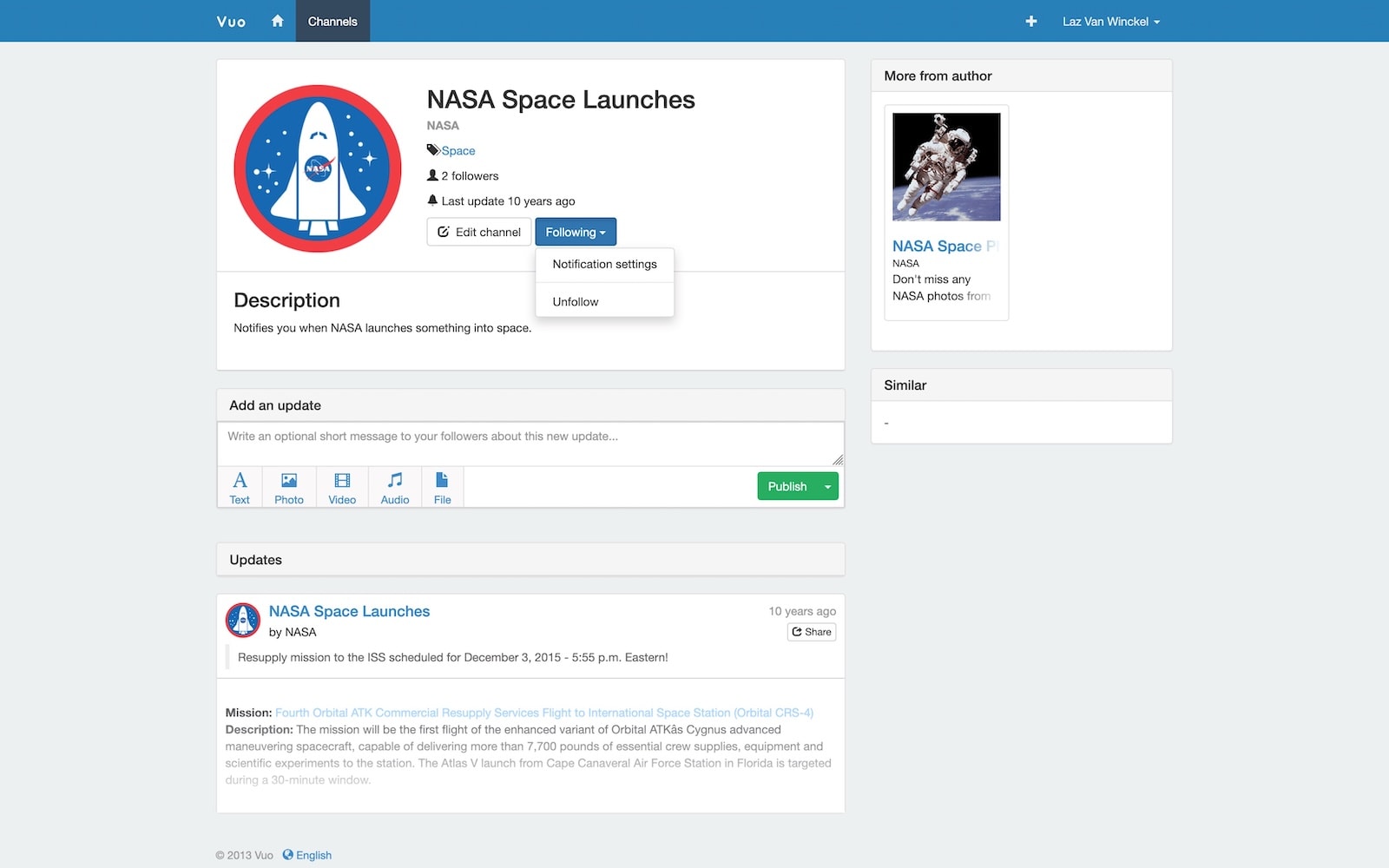
Most of the web is unstructured. The things people want to monitor are rarely exposed through clean APIs or consistent formats. They exist as pages, listings, documents, and interfaces that vary endlessly from one site to another.
Before recent advances, building a universal monitoring system meant writing custom logic for each of those cases. That approach could work within narrow domains, but it did not scale to the web as a whole.
What has changed is the ability to interpret and understand that unstructured content.
Modern AI systems can read web pages with enough context to determine not just that something has changed, but whether that change is relevant to a specific request. This makes it possible to move beyond simple change detection and toward meaningful monitoring at scale.
For the first time, a general purpose notification layer for the web is not just an idea. It is a practical system that can be built.
From reactive to proactive
Today’s web is fundamentally reactive.
You ask a question, perform a search, navigate through results, and extract what you need. When something changes, you have to repeat that process.
The next phase of the web is more proactive.
Instead of requiring constant interaction, systems will observe, interpret, and surface important changes as they happen. The role of the user, or the agent acting on their behalf, shifts from actively searching to defining what matters and being informed when it does.
Vuo is being built as part of that shift.
What we are building
Our goal is straightforward. To make anything on the web observable.
Not just within a single category like prices, jobs, or outages, but as a general layer that can sit underneath any use case where change matters.
A system where you do not need to know exactly where to look, or how to monitor it. You do not need to repeatedly check for updates or build custom solutions for each new source.
You define what matters once, and the web is continuously observed on your behalf.
This is the first post on the Vuo blog. In future posts, we will go deeper into how the system works, the technical challenges behind monitoring the open web, and what we are learning as more users and agents begin to rely on it.
Welcome to Vuo.